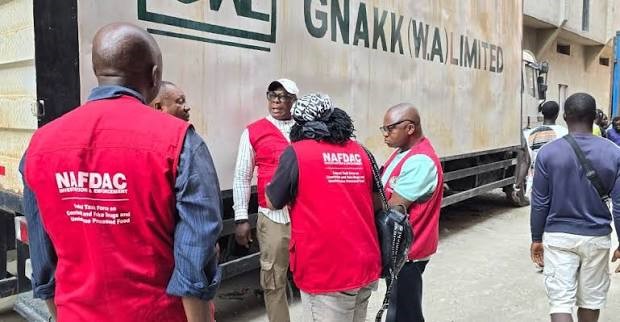






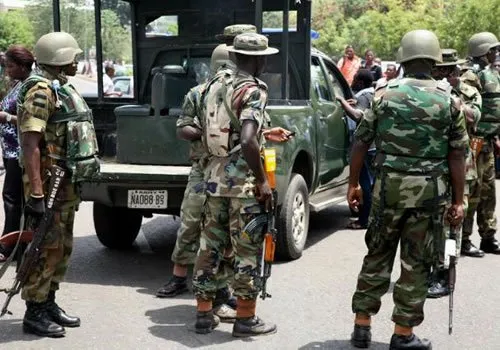
Nigeria received a rare piece of good news from its troubled security front last week when security forces rescued more than 300 people from captivity in the forests of Kainji Lake National Park. Among those freed were 163 residents of Woro in Kwara State, who had been held since gunmen attacked their community on February 3 in a massacre that reportedly left at least 170 people dead. Another 145 captives were rescued from neighbouring Niger State. President Bola Tinubu described the operation as the largest single-day rescue of hostages by joint security forces in Nigeria’s history.
The Rescue of More Than 300 Captives Is a Major Security Success
It is an achievement that deserves commendation. The soldiers, police officers, intelligence personnel and counterterrorism operatives involved in the operation have demonstrated what Nigeria’s security institutions can accomplish when intelligence, coordination and operational capacity are brought together effectively. For families who had spent six agonising months wondering whether their loved ones were dead or alive, the rescue means considerably more than another statistic in a government statement. Parents have been reunited with children, husbands with wives and communities with people many had probably feared they would never see again.
Yet celebration must not prevent interrogation. Indeed, the extraordinary scale of the rescue makes the questions surrounding it even more important. Behind the impressive figure of more than 300 rescued Nigerians lies another number that should trouble the authorities: six months. That was approximately how long some of these citizens remained in captivity before the state reached them.
Accounts emerging from survivors make those months particularly horrifying. Freed captives have spoken about witnessing death and severe suffering in the forest. Women reportedly had to bury fellow hostages who died in captivity. Babies were delivered under primitive conditions, including by a nurse who had none of the equipment normally required for childbirth. The captives also reportedly learnt to hide whenever military helicopters flew overhead, fearful of being detected by aircraft without knowing when, or whether, those flights would eventually translate into their freedom.
This is where an otherwise impressive security success becomes an uncomfortable indictment of the system.
The terrorists did not disappear into some previously unknown territory beyond the reach of the Nigerian state. They operated within and around Kainji Lake National Park, an enormous but known geographical space that security authorities have for years identified as vulnerable to infiltration by terrorist and other armed groups. The Woro attack itself was no secret. The scale of the killings attracted national attention, while the abduction of scores of residents left families desperately awaiting intervention.
Six Months in Captivity: Why Did the Rescue Take So Long?
If the intelligence, personnel and operational coordination necessary to rescue hundreds of people existed in August, Nigerians are entitled to ask why the same machinery could not have been deployed successfully much earlier. What changed between February and August? When did security agencies establish the location of the captives? How long were the terrorists under surveillance? Were earlier rescue attempts considered and abandoned because of the danger to hostages? Did intelligence failures delay the operation? These questions do not diminish the courage of the personnel who eventually conducted the rescue. They are necessary precisely because Nigeria must learn from what happened.
There is an equally important question concerning the perpetrators. The authorities have provided limited public information about how the operation unfolded and whether those responsible for the massacre and abductions were arrested or neutralised. Operational secrecy is understandable, particularly where disclosure could compromise continuing counterterrorism activities. But Nigerians deserve to know whether the criminal network responsible for holding hundreds of their compatriots has actually been dismantled.
Rescuing hostages without destroying the infrastructure that enabled their captivity risks turning security operations into an endless cycle of abduction and rescue. The objective cannot simply be to recover victims after terrorists have attacked communities, murdered residents and disappeared into forests. The objective must be to ensure that these groups lose the capacity to carry out such attacks in the first place.
The Federal Government must therefore build on this success rather than merely celebrate it. Kainji Lake National Park and other forests being exploited by terrorists, bandits and kidnappers require sustained security presence. Nigeria’s vast forest reserves have become strategic assets for criminal organisations because state presence in many of them is weak. Security agencies need better aerial surveillance, intelligence gathering, drones, forest patrol units and permanent operational bases around vulnerable corridors. Cooperation among states sharing these forests must also become routine rather than episodic.
The operation itself offers another important lesson. Its success reportedly involved several arms of the security establishment working together. Nigeria’s security agencies have too often been criticised for rivalry, poor intelligence sharing and fragmented operations. The collaboration that produced this rescue should therefore become standard practice. Intelligence held by one agency must reach those capable of acting on it quickly. Terrorists exploit institutional gaps; the state cannot afford to create those gaps for them.
Most importantly, Nigeria must move from a security doctrine dominated by reaction to one built around prevention. The country cannot continue measuring success principally by how many kidnapped citizens are eventually rescued. Every mass abduction represents a failure that occurred before the rescue became necessary. Communities should be protected before terrorists arrive, intelligence should identify camps before hundreds of captives accumulate in them, and criminal networks should be dismantled before they become sufficiently powerful to occupy Nigerian territory for months.
There is therefore no contradiction in applauding the security forces while demanding answers from the security establishment. Both responses are necessary. The personnel who risked their lives to bring more than 300 Nigerians home deserve the country’s gratitude. But those responsible for designing and managing Nigeria’s security architecture must explain why so many citizens remained beyond the protection of their country for so long.
Nigeria should celebrate the families reunited last week. After the horrors they endured, they deserve every moment of that joy. But government must resist the temptation to treat the rescue as the end of the story. The true measure of security is not how dramatically the state responds after citizens have been abducted; it is how effectively it prevents them from being abducted in the first place.
The greatest victory, therefore, will not be another record-breaking rescue. It will be the day Nigeria no longer needs one.