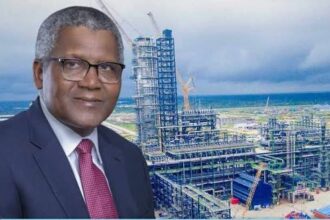


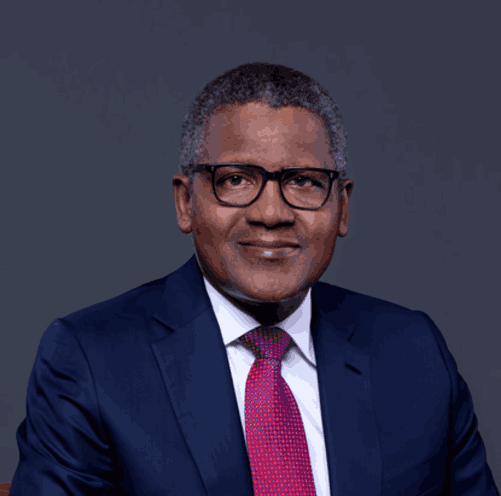
Aliko Dangote has said he is prepared to face legal challenges involving his businesses; and that he is willing to reduce his ownership of the Dangote Petroleum Refinery to as little as 25 per cent if more Africans want to invest in the company.
The president of Dangote Industries Limited made the remarks on Tuesday during a fireside chat at the Nairobi Securities Exchange, where he discussed his group’s expansion across Africa, the proposed Lamu refinery in Kenya and plans to broaden public ownership of the company.
His comments came as the proposed 700,000-barrel-per-day Lamu refinery faces a land dispute before a Kenyan court. The Malindi Environment and Land Court ordered parties to maintain the existing status quo on the disputed land until a hearing scheduled for October 14. The case was filed by 133 residents of Chandavai in Lamu County, who claim that the land earmarked for the refinery is ancestral property belonging to their communities.
Dangote said his group was accustomed to facing legal and regulatory challenges across Africa and expressed confidence that the Lamu project would proceed.
The Dangote Group has maintained that the court order does not prevent the planned groundbreaking ceremony, although it acknowledged that activities at the project site could be affected until the case is heard.
The $15bn–$16bn Lamu refinery is expected to mirror the scale of Dangote’s 700,000-barrel-per-day refinery in Nigeria and is targeted for completion by 2030. The project is expected to supply petroleum products to Kenya and other countries in East Africa.
Dangote also spoke extensively about the ownership structure of his businesses. He said the group wants to expand African participation in the ownership of its assets rather than retain control indefinitely.
He disclosed that the refinery’s share offering had generated strong demand and said Dangote was prepared to approach regulators for approval to sell additional shares if demand remained high.
According to Dangote, the company could eventually reduce its own holding to 20 or 25 per cent, allowing more Africans to become shareholders. He described the strategy as an effort to “democratise wealth-making” through broader ownership.
The planned Kenyan refinery is also expected to have substantial government participation. Kenya has been offered a 10 per cent stake, while up to 30 per cent of the refinery has been made available collectively to East African governments. Kenyan officials have indicated that the country could increase its stake if other regional governments do not take up their allocations.
The developments come shortly after Dangote opened the initial public offering of his Nigerian refinery, with the company seeking to broaden ownership through the Nigerian capital market. Nigeria’s Securities and Exchange Commission formally approved the IPO to open on September 14, 2026.
On Wednesday, Dangote and Kenyan President William Ruto formally broke ground for the Lamu refinery despite the ongoing legal dispute. Reuters reported that the facility is expected to cost about $16bn, with construction targeted for completion by 2030.