




Nigeria’s growing battle with counterfeit and substandard products is no longer a problem confined to fake medicines hidden in obscure warehouses. Increasingly, Nigerians are confronting suspected fake food, cosmetics, household products and other consumer goods in the open market. The latest reports of citizens exposing suspected counterfeit products on social media should alarm the government and every consumer.
The disturbing question is not merely why unscrupulous traders continue to sell fake products. It is how such products manage to travel through the supply chain and arrive at the point of sale in the first place.
A country cannot claim to have effective consumer protection when citizens must become investigators before buying ordinary products. Nigerians should not have to examine every bottle of palm oil, milk, packet of food, tube of cream or medicine with the suspicion that what is inside may not be what is written on the label.
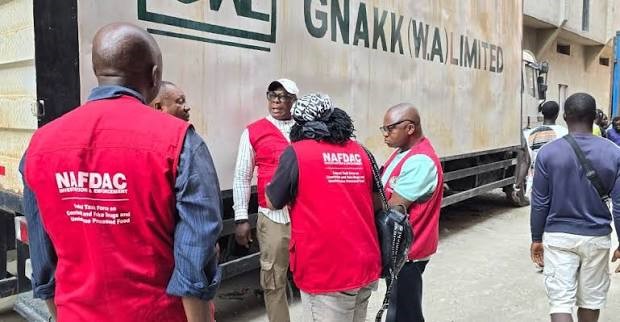
The National Agency for Food and Drug Administration and Control and the Standards Organisation of Nigeria have important responsibilities in this regard. Their mandates exist precisely because the ordinary consumer cannot independently test the safety, authenticity and quality of everything placed before them. Yet the continuing proliferation of counterfeit products suggests that enforcement is still struggling to keep pace with the criminals exploiting Nigeria’s markets.
This is not to dismiss the work of the regulatory agencies. NAFDAC has repeatedly seized and destroyed huge quantities of counterfeit and unregistered products. Earlier this year, for instance, the agency destroyed pharmaceutical products worth about N2bn in Kaduna, including counterfeit Pregabalin capsules that had been intercepted before reaching consumers.
But seizures cannot be the principal measure of success.
If regulators continually discover fake products after they have entered the distribution chain, the obvious question is what happened before the seizure. Who manufactured them? Who imported them? Who transported them? Who financed the operation? Which warehouses stored them? Which distributors supplied the retailers? And, most importantly, how many similar consignments escaped detection?
The counterfeit business survives because it is profitable. Criminals do not manufacture fake products out of charity. They exploit the combination of weak enforcement, porous borders, poor traceability, consumer desperation and the enormous size of Nigeria’s informal market.
The current economic hardship makes the problem even more complicated. Millions of Nigerians are under pressure to reduce household expenses. When the genuine product becomes too expensive, the cheaper alternative becomes attractive, even when the consumer suspects that something may be wrong with it.
That is why the fight against counterfeit products cannot be reduced to arresting traders in markets.
Government must attack the entire ecosystem.
Customs enforcement must prevent illegal consignments from entering the country. Regulatory agencies must improve intelligence-led inspections and product traceability. Manufacturers must strengthen authentication systems so consumers can easily determine whether a product is genuine. Law-enforcement agencies must pursue the financiers and major distributors behind counterfeit networks rather than concentrating only on the final retailer.
Most importantly, offenders must face consequences serious enough to make counterfeiting a dangerous business.
There is little deterrence when a trader is arrested today and another simply takes over the business tomorrow. Counterfeiters are not merely committing commercial fraud. When the product is a drug, food item, cosmetic or other product capable of causing physical harm, they are putting human lives at risk.
Fake medicines are perhaps the most frightening example. A patient who buys a counterfeit drug is not simply losing money. The patient may lose precious time in treating a serious illness, suffer complications or die. NAFDAC has previously warned that counterfeit medicines can cause treatment failure, serious health complications and death.
The same principle applies beyond medicines. A cosmetic containing harmful substances can damage a person’s health. Adulterated food can cause illness. A counterfeit electrical product can cause a fire. Fake vehicle parts can contribute to fatal accidents. The consequences extend far beyond the immediate transaction between buyer and seller.
Nigeria must therefore stop treating counterfeiting as an ordinary market nuisance.
It is a public-health problem, a consumer-protection problem, an economic problem and a governance problem.
There is also a need for greater consumer awareness. Nigerians should be encouraged to verify products, purchase medicines from licensed outlets and report suspicious goods. But government must not transfer its regulatory responsibility to citizens. Public vigilance is useful; it cannot replace effective regulation.
The goal should be a marketplace in which a Nigerian can buy a product without wondering whether the government has already failed to protect him.
Nigeria does not lack regulatory agencies. What it lacks is sufficient enforcement, coordination, accountability and deterrence to match the scale of the counterfeit economy.
The government must therefore move beyond periodic raids and seizures. It must dismantle the networks that manufacture, import, finance and distribute fake products.
A country where almost anything can be counterfeited is a country where trust itself becomes a casualty.
Nigerians deserve better than a market where the burden of determining what is genuine falls almost entirely on the consumer. The government must make it increasingly difficult for counterfeiters to operate, increasingly easy for consumers to verify products and increasingly costly for anyone who deliberately puts dangerous goods in the hands of Nigerians.
The fight against fake products must no longer be reactive.
Nigeria must make its markets safe for Nigerians.