


Nigeria has spent years fighting counterfeit products, but the latest revelation by the National Agency for Food and Drug Administration and Control has taken the crisis to a more disturbing level. According to the agency, some Chinese nationals previously involved in producing counterfeit goods outside Nigeria have established operations inside the country, including production facilities and logistics networks used to distribute fake products.
This should not be reduced to another story about fake toothpaste, counterfeit drugs or adulterated food. It is a serious test of Nigeria’s capacity to enforce its own laws.
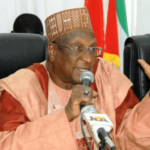
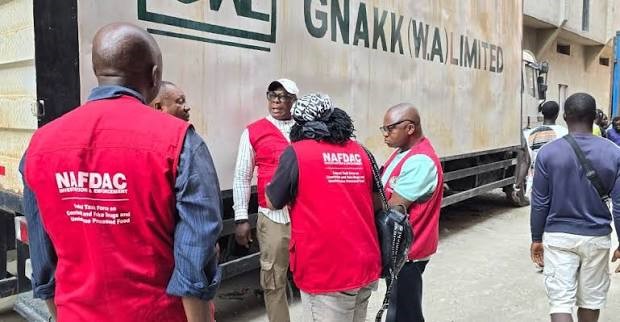
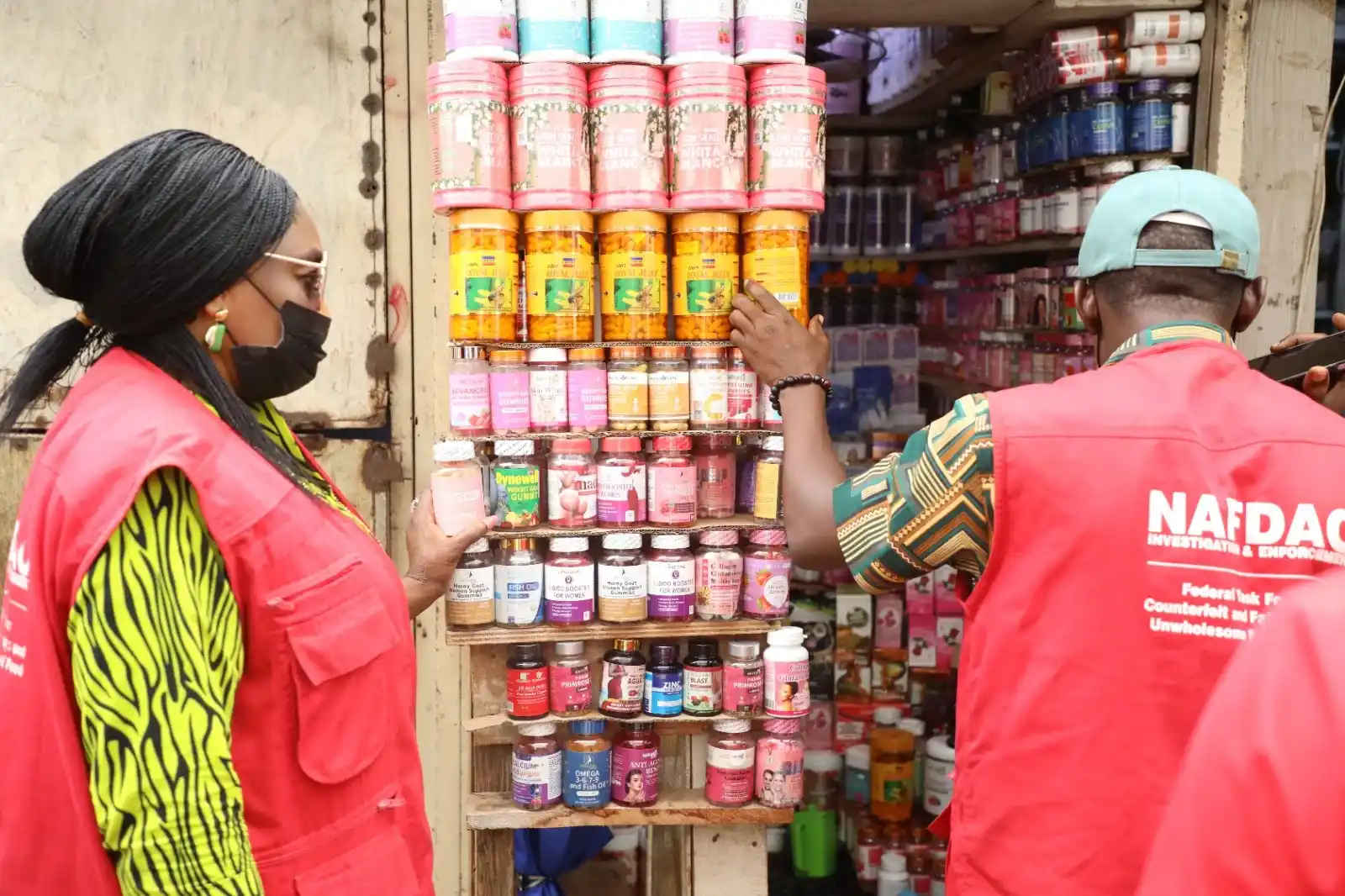
NAFDAC’s Director of Investigation and Enforcement, Martins Iluyomade, said investigations had uncovered Chinese counterfeiters operating within Nigeria and using logistics companies allegedly owned by them to distribute fake goods. The agency says it has shut down some of the companies and is prosecuting suspects, including two people accused of importing counterfeit toothpaste.
The government must now answer the obvious questions.
Who owns the factories producing these products? Who owns the warehouses? Who owns the logistics companies? Who finances the operations? Who brings the materials into Nigeria? Who clears them at the ports? Who distributes the finished products? And how long have these networks been operating under the noses of the relevant authorities?
These questions matter because counterfeiters do not operate in a vacuum.
A factory does not simply appear overnight. A warehouse has an address, a logistics company has registration documents, containers pass through ports, trucks move goods across states, products are stored somewhere before they reach markets and shops, and money changes hands.
There is therefore a limit to how much longer Nigeria can explain the counterfeit crisis as though the perpetrators are invisible criminals operating from some mysterious underground world.
NAFDAC’s own record demonstrates the scale of the problem. The agency says it has destroyed or seized more than ₦1.54tn worth of fake and substandard products nationwide since 2023. It also says it secured 64 convictions for counterfeiting offences between June 2025 and June 2026, with some offenders receiving prison sentences of up to seven years.
These are significant enforcement figures. But they also raise another question: if more than ₦1.5tn worth of fake products can be identified and destroyed, how much more is getting through?
Nigeria Must Dismantle the Networks Behind Counterfeit Products
Seizures are necessary, but they are not the final measure of success.
The real victory will come when the business model becomes too risky and too expensive for counterfeiters to sustain.
That requires more than NAFDAC. The Nigeria Customs Service must know what enters the country through its ports and borders. The police and other security agencies must investigate the criminal networks behind large-scale counterfeiting. The Corporate Affairs Commission and financial intelligence authorities should be able to trace the ownership and financial flows of companies involved in suspicious activities. The Standards Organisation of Nigeria must play its part where products fall within its mandate. The Federal Competition and Consumer Protection Commission must continue to protect consumers and legitimate businesses.
Above all, these institutions must share intelligence.
Counterfeiters Exploit Gaps Between Government Agencies
Counterfeiters thrive in the gaps between government agencies. One agency may identify a suspicious product, another may have information about the importer, another may know the warehouse, while another has access to financial information. If these pieces of information remain locked inside separate bureaucratic compartments, the criminal wins.
The latest NAFDAC revelation should therefore prompt a coordinated investigation into the entire counterfeit supply chain.
Government should not be satisfied with arresting the trader selling fake toothpaste at the end of the chain while the people financing and organising the operation remain untouched.
The Law Must Be Blind to Nationality
Nor should foreign nationality become a substitute for investigation. The issue is not that Chinese citizens are Chinese. Nigeria has legitimate Chinese manufacturers, investors, traders and businesses that contribute to the economy. The problem is any individual or company, Nigerian or foreign, that deliberately manufactures or distributes products capable of harming Nigerians.
The law must be blind to nationality.
At the same time, Nigeria must be careful not to allow legitimate international trade to become a cover for criminal activity. China is Nigeria’s largest source of imports, accounting for about ₦11tn, or 39 per cent, of Nigeria’s total imports in the first half of 2026.
That enormous trading relationship makes effective regulation even more important.
Nigeria cannot afford a situation in which legitimate trade and criminal counterfeit networks become indistinguishable. Genuine Chinese businesses should have nothing to fear from stronger enforcement. In fact, they also have an interest in seeing counterfeiters removed because fake products damage legitimate brands and undermine consumer confidence.
The greatest victims, however, remain Nigerians.
A person buying counterfeit toothpaste may suffer harm. A patient taking a fake medicine may lose the opportunity for proper treatment. A family buying adulterated food may unknowingly expose its children to dangerous substances. A legitimate manufacturer may lose customers to an inferior imitation and eventually be forced to reduce production or shut down.
This is why counterfeiting is not merely a commercial offence.
It is a public-health threat, an economic threat and a threat to the credibility of the Nigerian marketplace.
The recent public outcry has already shown how deeply Nigerians have lost confidence in the products they buy. Consumers are increasingly being forced to behave like laboratories, pharmacists, food scientists and investigators before purchasing ordinary household products. As one doctor recently argued, the average Nigerian should not have to become a product inspector simply to buy toothpaste, food or medicine safely.
That is unacceptable.
The government has regulatory agencies precisely because consumers cannot perform these functions themselves.
NAFDAC has now given Nigerians an important piece of information: sophisticated counterfeit networks are allegedly operating within the country. The agency has also demonstrated that it has the capacity to investigate, seize, prosecute and secure convictions.
Nigeria Must Follow the Counterfeit Trail to the Top
The next step must be to follow the trail all the way to the top.
Who owns the factories? Who finances them? Who clears their goods? Who moves their products? Who protects them?
And when those people are identified, Nigerians must see more than another raid and another pile of destroyed products.
They must see prosecutions, convictions, asset seizures and the dismantling of the networks themselves.
Nigeria cannot continue destroying counterfeit goods worth billions while allowing the machinery that produces those goods to survive.
NAFDAC has shown Nigerians where to look. Government must now show Nigerians that it has the will to follow the trail.